



Co-facilitating a statewide trainers' training on the University of California's Student Leadership Institute for Climate Resilience, Santa Cruz, CA, 2018. Abby Reyes directed UCI Community Resilience from 2016 to 2026.
-
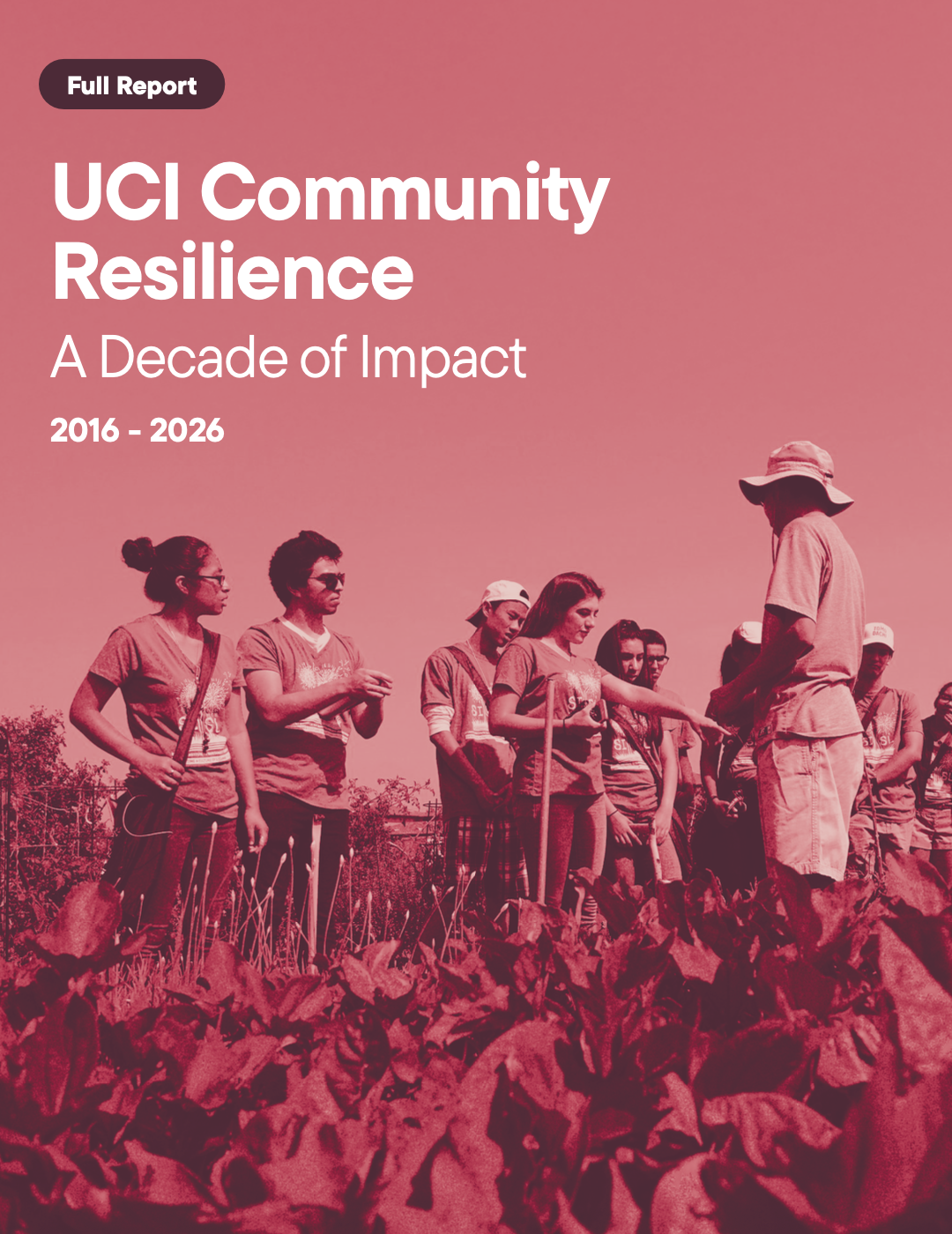
[Full Report] UCI Community Resilience: A Decade of Impact 2016 - 2026 (2026)
From 2016 to 2026, UCI Community Resilience built capacity, knowledge, and power among resident leaders from climate-vulnerable communities, together with their academic partners, to accelerate community-owned just transition solutions. Read about our decade of impact in this full report.
-

[Summary Report] UCI Community Resilience: A Decade of Impact 2016 - 2026 (2026)
From 2016 to 2026, UCI Community Resilience built capacity, knowledge, and power among resident leaders from climate-vulnerable communities, together with their academic partners, to accelerate community-owned just transition solutions. Read about our decade of impact in this summary report.
-
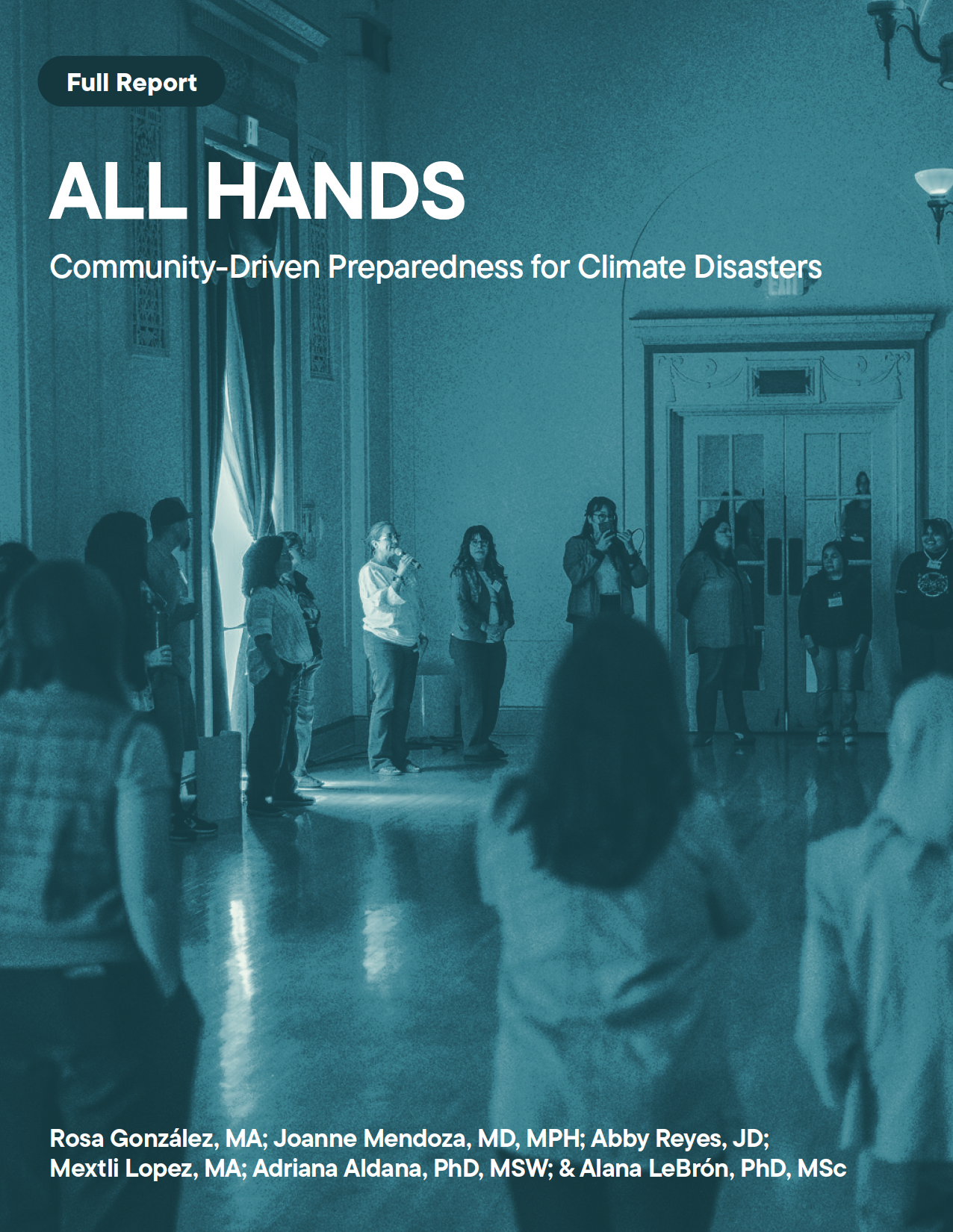
[Full Report] ALL HANDS: Community-Driven Preparedness for Climate Disasters (2026)
ALL HANDS is a ten-workshop series on community-driven preparedness for climate disasters. Read about the 2026 pilot series in Santa Ana, California, and a trainers’ training with community stewards from 25 additional climate-vulnerable communities across California in this full report.
-
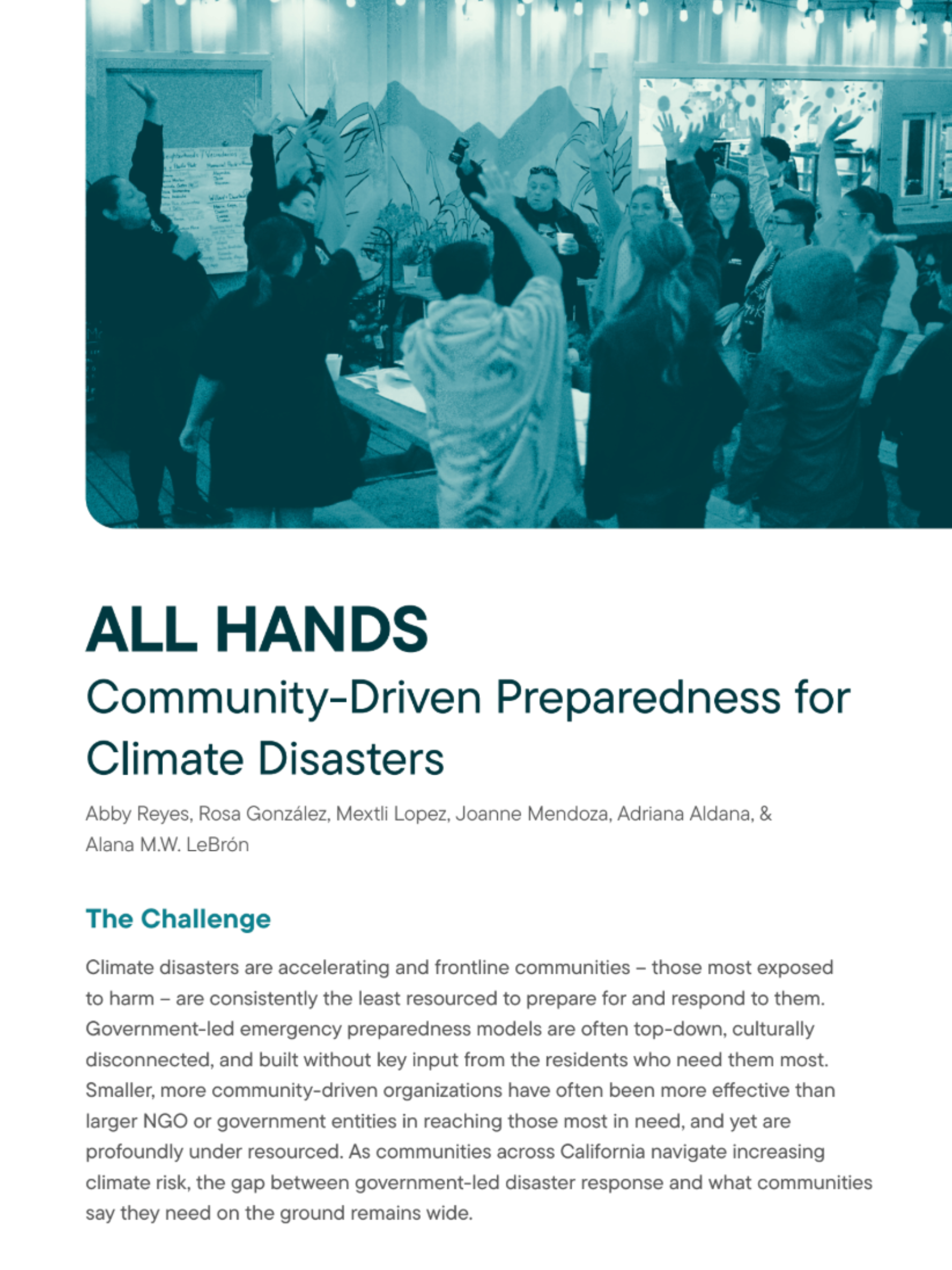
[Summary Report] ALL HANDS: Community-Driven Preparedness for Climate Disasters (2026)
ALL HANDS is a ten-workshop series on community-driven preparedness for climate disasters. Read about the 2026 pilot series in Santa Ana, California, and a trainers’ training with community stewards from 25 additional climate-vulnerable communities across California in this summary report.
-
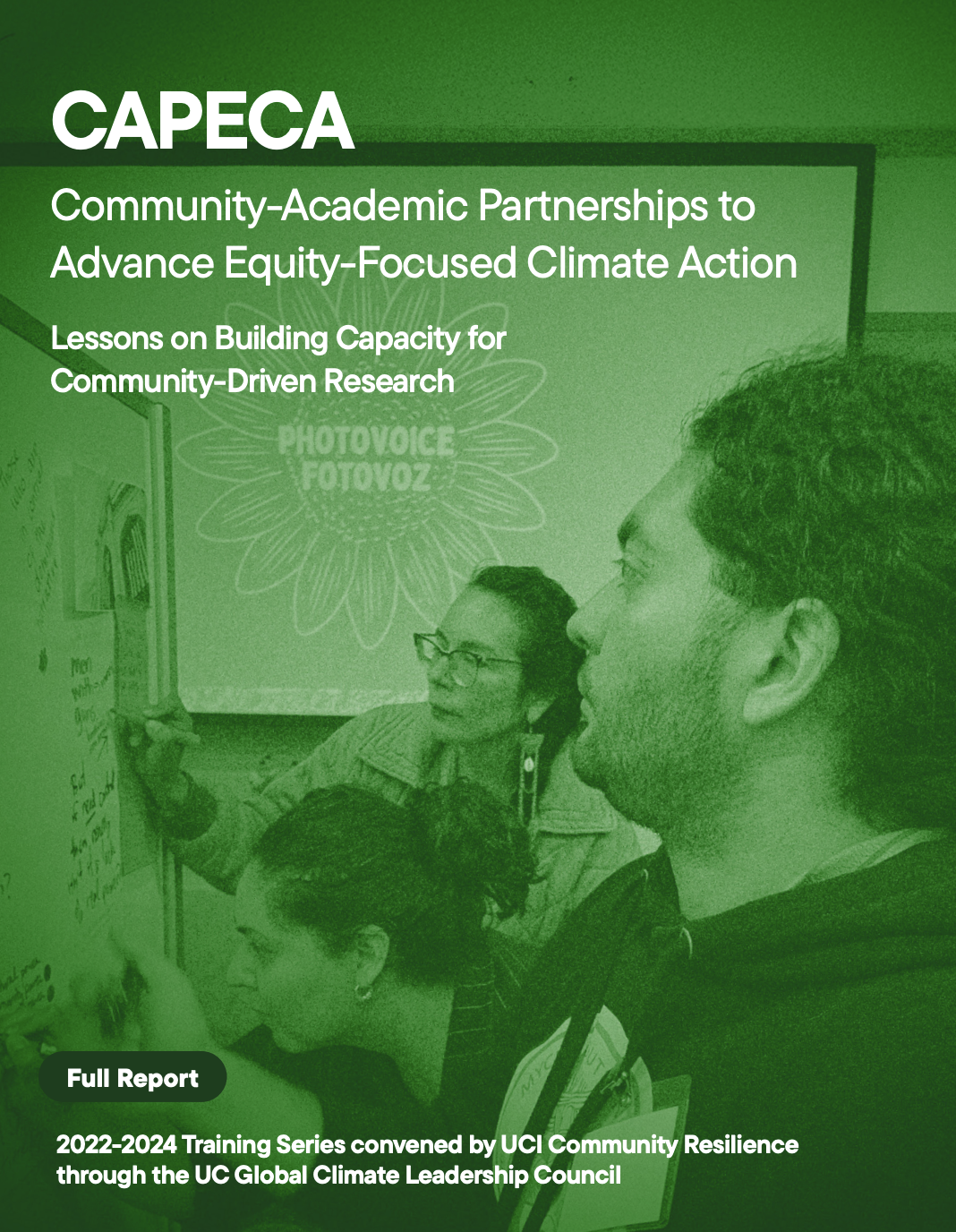
[Full Report] CAPECA: Lessons on Building Capacity for Community-Driven Research (2025)
CAPECA was an 18-month training program for 12 place-based partnerships across California that aimed to strengthen equitable collaborations between community leaders and academic researchers, ensuring that frontline communities play a central role in accelerating local climate resilience planning and research. Read this full report for key findings and the lessons we learned in the making.
-
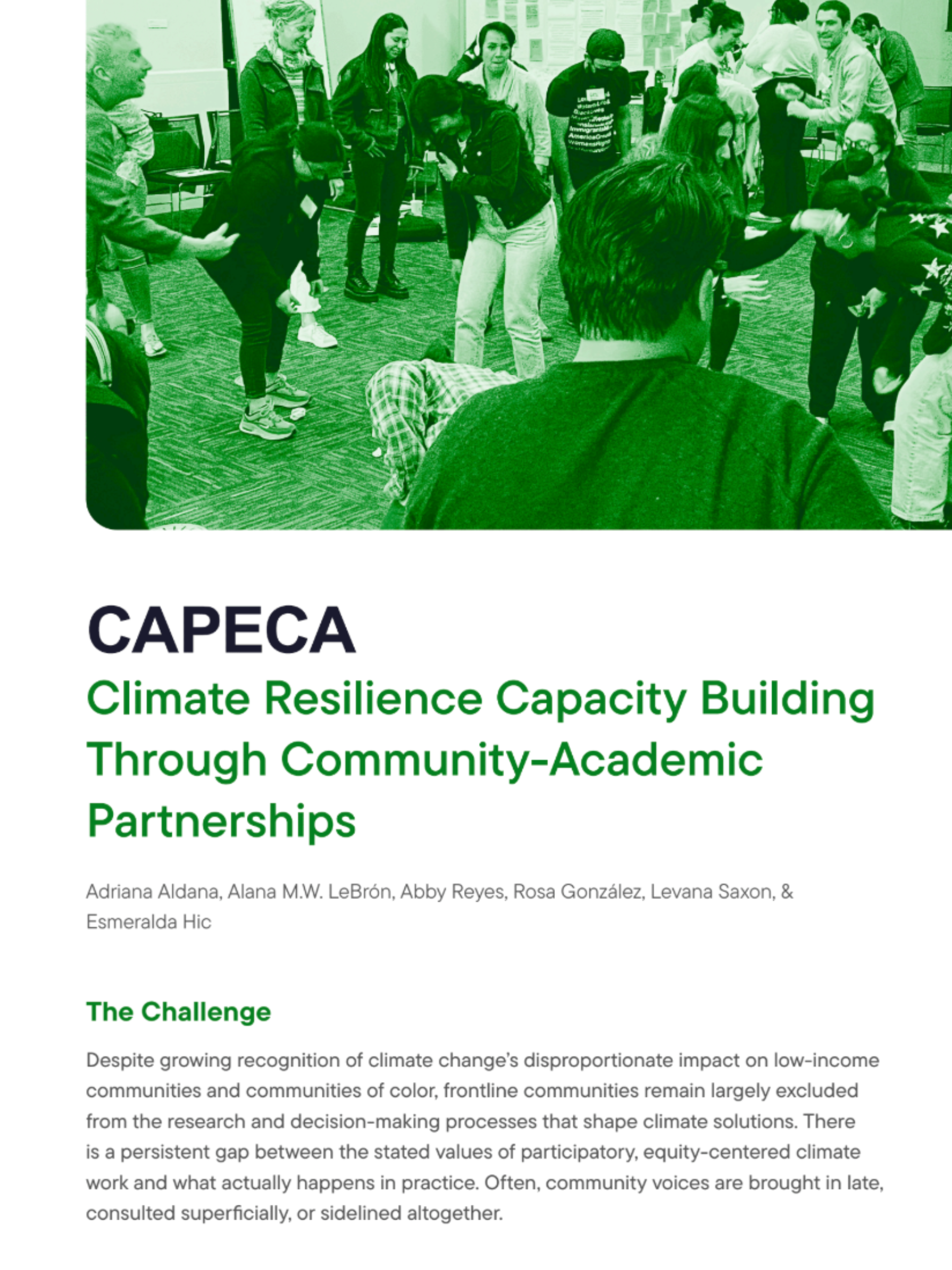
[Summary Report] CAPECA: Climate Resilience Capacity Building through Community-Academic Partnerships (2025)
CAPECA was an 18-month training program for 12 place-based partnerships across California that aimed to strengthen equitable collaborations between community leaders and academic researchers, ensuring that frontline communities play a central role in accelerating local climate resilience planning and research. Read this brief missive for the gist.
-
Journal of Community Practice: Lessons from the CAPECA Project (2026)
This descriptive case study draws on exit interviews, program archives, and team-generated materials to examine CAPECA’s 18-month training program. Findings show that CAPECA strengthened participants’ skills in inclusive facilitation, research design, and action planning. Teams applied participatory methods to co-produce knowledge, mobilize engagement, and center cultural and local priorities.
-
Just Transition Lawyering Institute: Year One Evaluation (2024)
The Just Transition Lawyering Institute brought lawyers together to learn from leading just transition legal scholars, lawyers, and community organizers various ways to use law practices to address the needs of frontline communities and advance a just transition. The Institute is now anchored at the Chisholm Legacy Project with a lawyers network anchored at Taproot Earth. Read our evaluation of the Institute’s first year.
-
Three Questions of People, Power, and Place (2023)
This report and curriculum guide summarize a 2023 workshop series at the Center for Environmental Health Disparities Research (CEHDR) at the University of California, Irvine (UCI). The document highlights a feasible and replicable approach towards an antiracist foundation for emerging initiatives on environmental health disparities research.
-
Vaccine Equity Best Practices Checklist: A Community-Centered Call to Action for Equitable Vaccination Practices (2022)
In response to COVID-19 vaccine inequities unfolding locally, the Orange County Health Equity COVID-19 community–academic partnership generated a tool to guide a more equitable vaccine approach. The OC vaccine equity best practices checklist shifted the local vaccine distribution approach for the better. Read how.
-
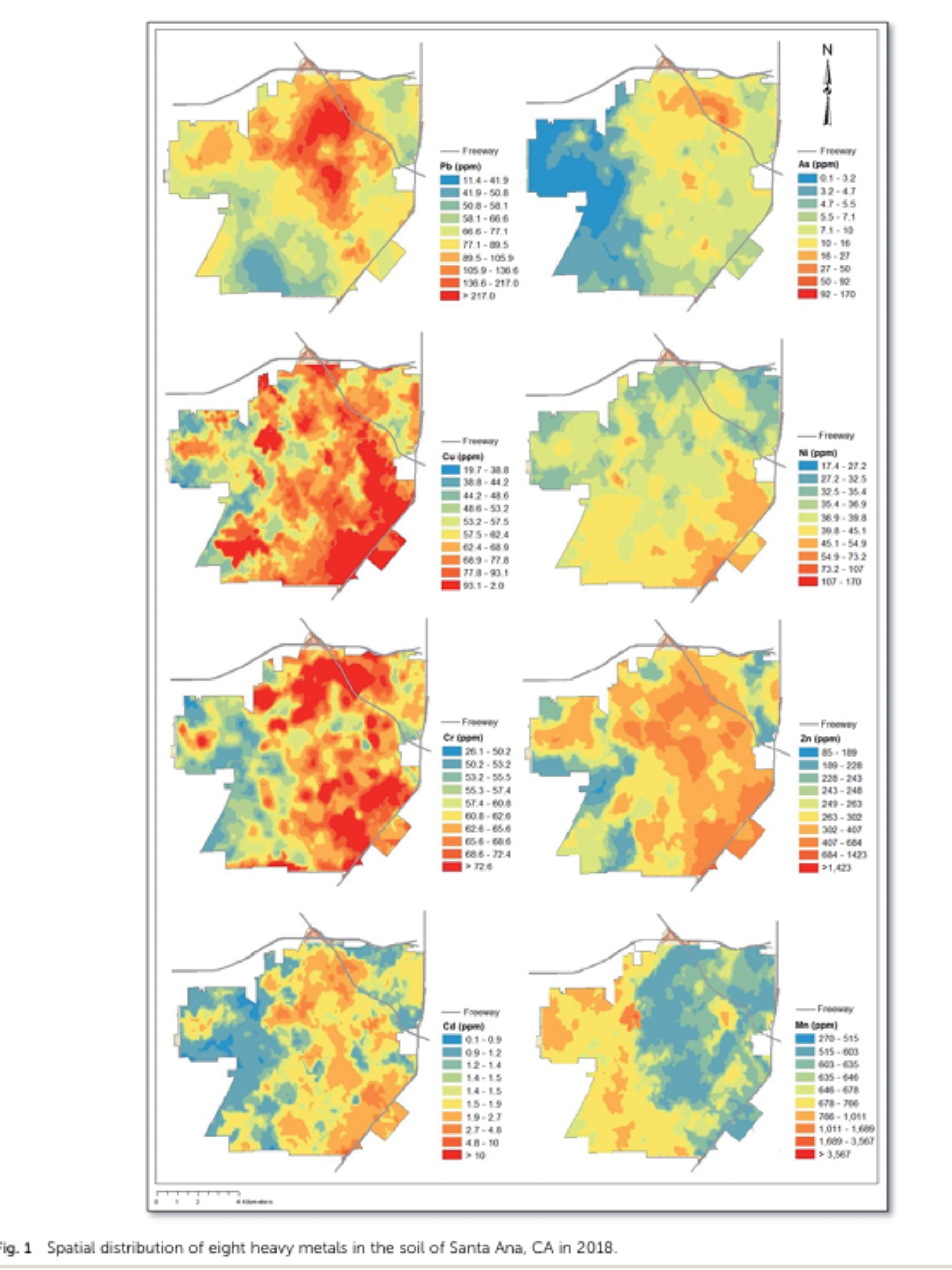
Risk Assessment Of Soil Heavy Metal Contamination At The Census Tract Level In The City Of Santa Ana, CA: Implications For Health And Environmental Justice (2021)
We carried out a community-based participatory research study to examine the distribution of heavy metal concentrations in the soil and social vulnerabilities to soil heavy metal exposures across Census tracts in Santa Ana, California. The project continues today as I-CLEAN. Read one of our early papers about the implications for health and environmental justice.
-
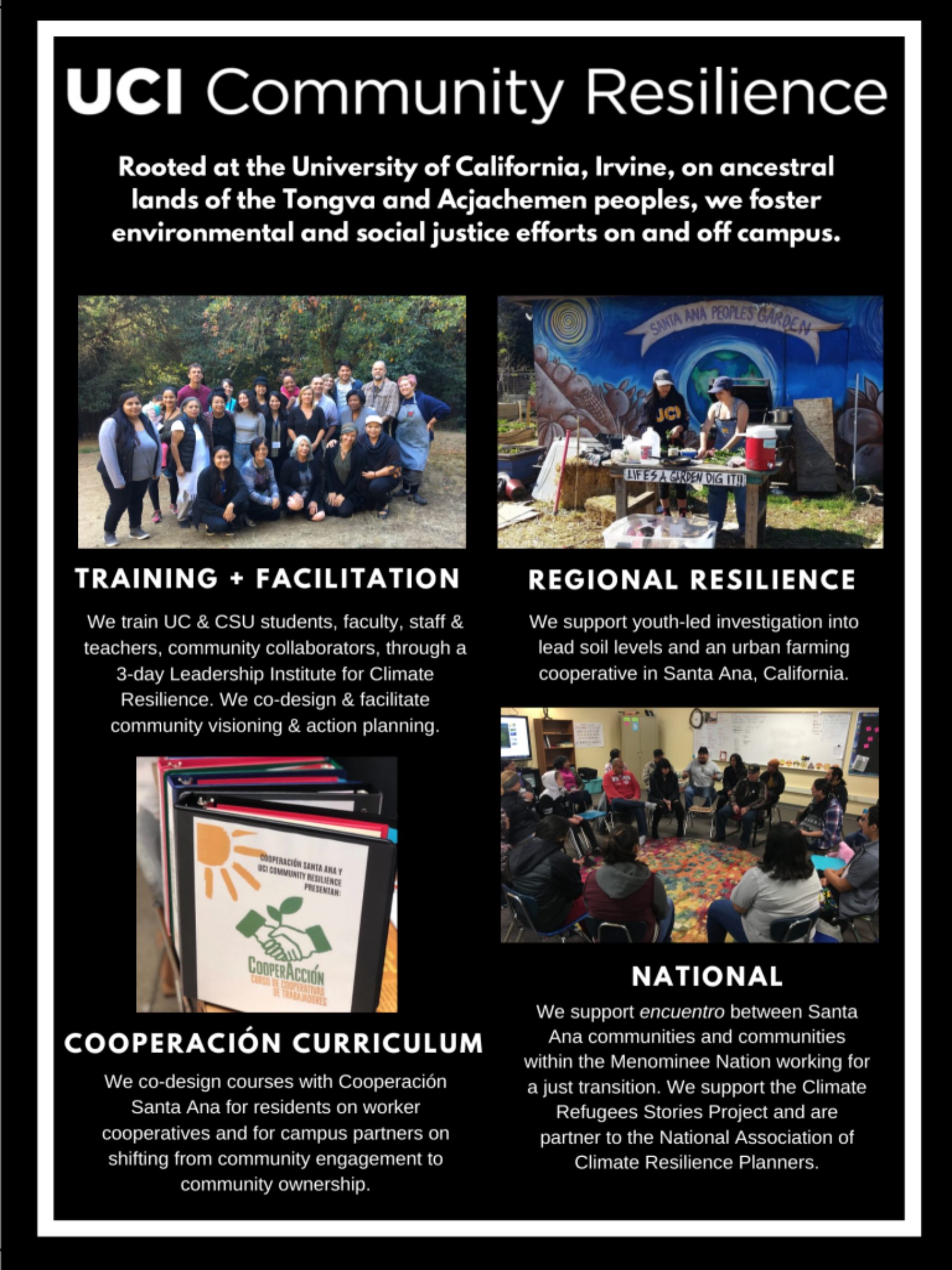
UCI Community Resilience Postcard (2019)
Enjoy this postcard artifact that captures snapshots of some of the early UCI Community Resilience projects.
-
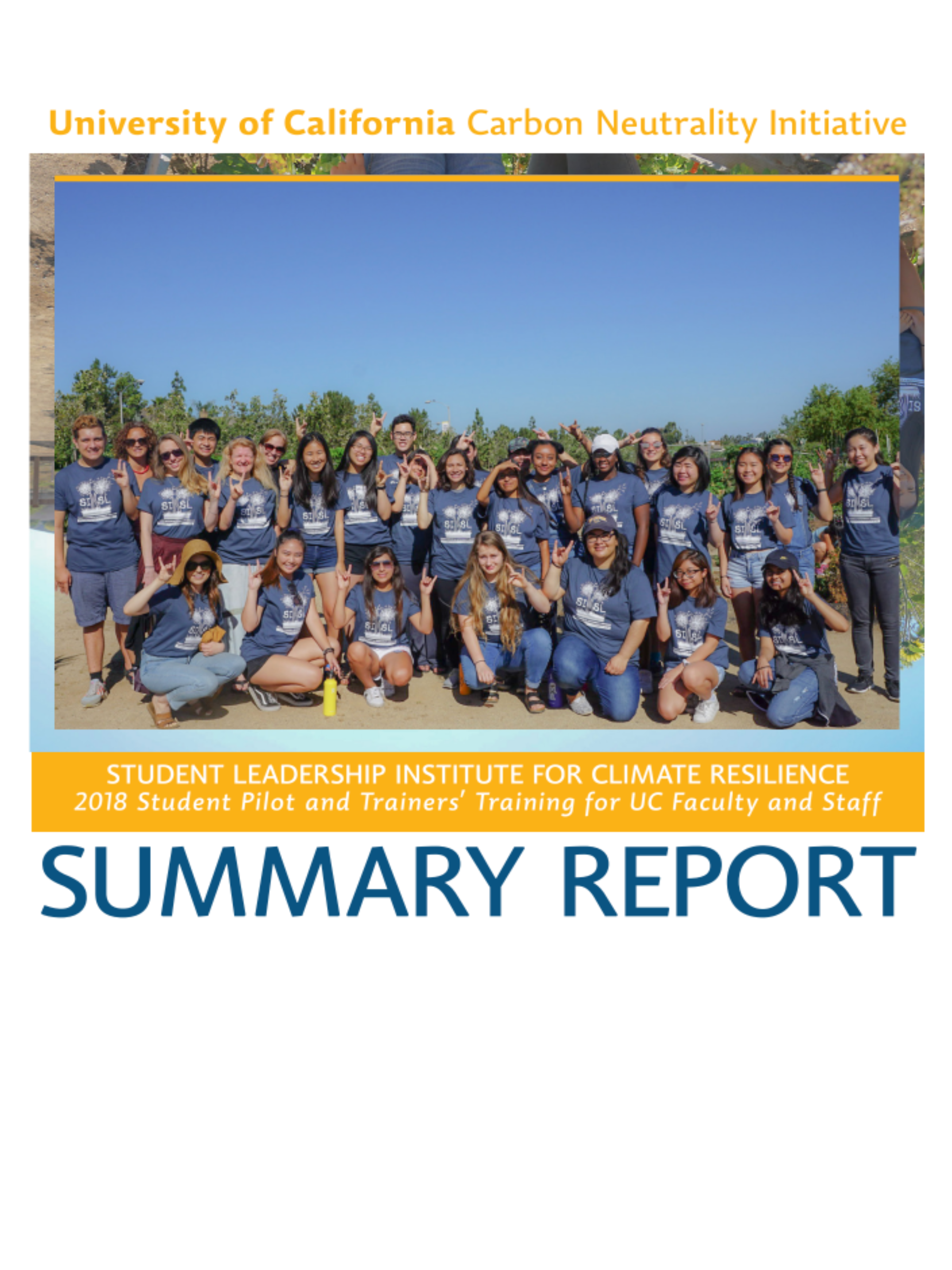
[Full Report] Student Leadership Institute For Climate Resilience (2018)
UCI Community Resilience created the University of California’s Student Leadership Institute For Climate Resilience, a co-curricular training now offered on multiple UC and California State University campuses. Read our summary report about the 2018 pilot of this curriculum at UCI and a statewide trainers’ training for university faculty and staff from ten campuses.
-
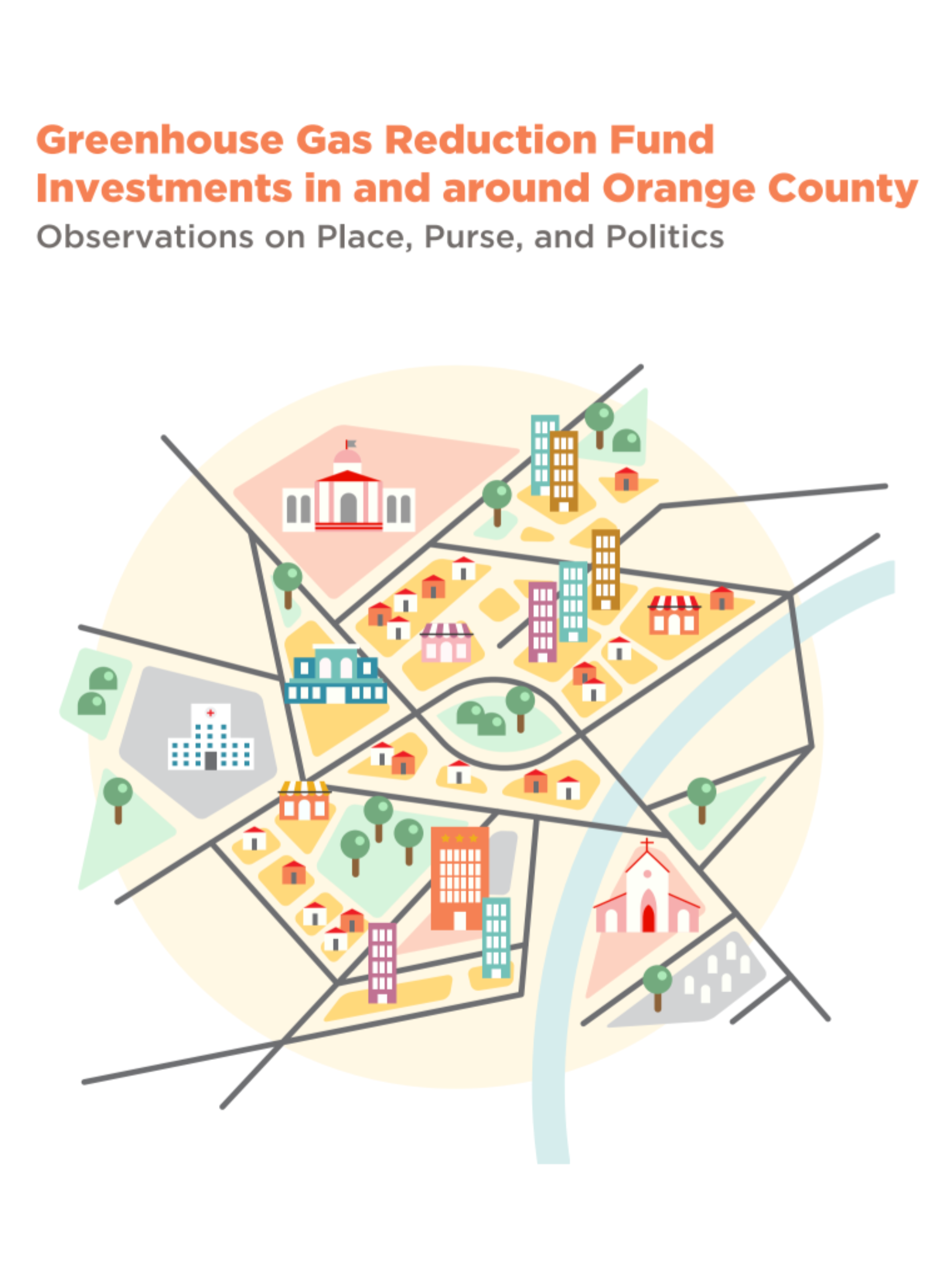
Greenhouse Gas Reduction Fund Investments in and around Orange County: Observations on Place, Purse, and Politics (2017)
UCI Community Resilience shared this report to increase understanding of then-current Greenhouse Gas Reduction Fund investment trends in Orange County, California, and its borderlands with a lens toward assessing whether, and to what extent, inequities may exist in how funds are disbursed.
-
Transformational Sustainability Leadership (2015)
Enjoy this pamphlet artifact that captures snapshot descriptions of some of the early UCI Community Resilience approaches to strengthen student leadership.
